The Roots Run Deep: Non-Anxious Theology in an Anxious Age

The way theological conversations are unfolding in my tradition these days calls for a non-anxious presence. Usually, anxiety shows up in organizations amid rapid social change, and that’s precisely what we are encountering now. American culture is experiencing more extreme culture shifts more rapidly than it has ever seen before, and I can see the church being swept up in it. This is a moment that calls for doing theology non-anxiously, not by falling for false alternatives that present a quick fix to our social instability, but by rooting deeply into the gift of our tradition.
A Tale of Two Emails
Two messages came in on the same day, both raising questions about a clergy education program I helped develop. The first email raised questions about nearly every textbook in the program. Though there were no direct engagements with the content of the books themselves, the email’s author was suspicious because ‘I’ve heard so and so believes such and such.’ (Every one of the books had undergone a theological review by a committee before publication, but I don’t think the email’s writer knew that.)
The other email asked for theological clarification on a word used in a course he didn’t know. It was a word he wasn’t sure he wanted to use because it carried a connotation that he thought contradicted our tradition. He pointed to several specific examples in our tradition in which theologians had worked on that word.
I can’t speak for the motivations of each person who wrote those emails, but reading them back-to-back gave me an opportunity to reflect on the theological dynamics we’re living in today. It’s never a problem to field questions and offer clarification to notes like this, but one struck me as being very anxious, while the other seemed to be seeking clarification by rooting more deeply into our theological tradition. It was, for me, a microcosm of the larger theological conversation and the motivations undergirding it.
Non-Anxious Examples
This isn’t the first time we have encountered these dynamics, and there are non-anxious examples who have guided us previously. A ’non-anxious presence’ is a description of a pastor I heard in my early days of ministry. Pastors, I quickly learned, are called to step into crisis situations where change is happening quickly, most of which are laden with anxiety. The way a pastor shows up can make all the difference in a situation. You can add to the anxiety, becoming consumed by a frantic attempt to stem the change and bring the situation under control, or you can take account of the situation, look for the ways God’s presence is showing up in the situation, and give yourself more to God’s presence than anxiety, quietly inviting others to join you in that posture.
Mildred Bangs Wynkoop, a predecessor of mine in teaching theology at Trevecca, is one of the northern stars of non-anxious theology for me. Though she passed away before I knew what theology was, she has become an example to me of ‘showing up’ in the theological room as a non-anxious presence.
While Wynkoop was a professor at Trevecca, American culture was staggering through a massive social change as the Boomers began to question the virtue of social conformity that characterized their parents. The Civil Rights movement was in full swing, images of a faraway war filled American television screens each evening, and women were staking our new roles at home and in the workplace. In short, things were changing, and they were changing quickly. Of course, that will create anxiety, and of course, this is going to shape the way theology gets done.
Two Approaches
A simple (though not entirely complete) way to narrate the church’s response to rapid social change was to gravitate toward theological programs that offered a quick sense of stability amid social disorientation. In Wynkoop’s (and my) denomination, a group began to form around a brand of theology that sought to name the sins of the age decisively and distance itself from them. I call this the ‘get the sin out!’ approach. It tends to be primarily motivated by ridding ourselves and our society of sin. It generally looks to extract problems, resulting in a ‘pure’ state.
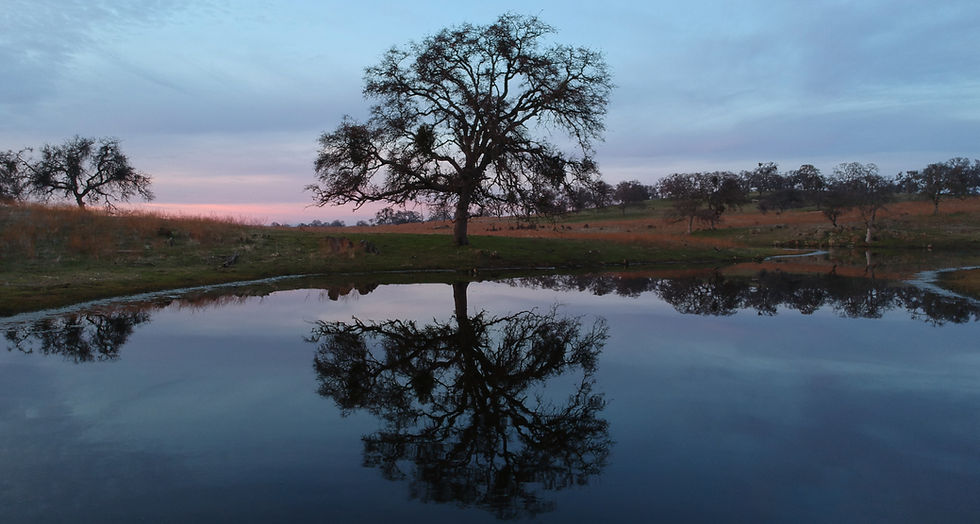
Wynkoop, instead, turned toward a deep well of theological resource that had largely been forgotten in Nazarene circles. She started reading the works of John Wesley and discovered how the tree of Wesleyan theology was nourished by roots sunk deep into the Old and New Testaments. What she pointed toward was a theology that was like a slow-growing oak that had been growing for generations and was now leafing anew for an anxious generation. It’s an approach that I call, ‘fill our hearts with love,’ entirely dependent upon a vital and intimate relationship with God. Wesley used the more archaic phrase, ‘love excluding sin.’ Its primary motivation is intimacy with God; the secondary reality is that it changes our motivation away from ungodly behaviors because we don’t want to do things that harm the relationship with the One we love.
There are other places for a theological evaluation of the two approaches I’ve outlined in more detail. Here, I’m simply offering the observation that theology can be done non-anxiously and calling for us to adopt the wisdom of our ancestors who have embraced a non-anxious presence. We are, as they were, thrust into a time of rapid social change, and it is creating anxiety, making ‘get the sin out!’ approaches an attractive harbor for those seeking a bit of social stability. These approaches have often been the well-intentioned pathway to legalism; we tried as hard as we could to rid sin from ourselves and the world around us, and found that journey never could result in true freedom from sin. I wonder, though, if these approaches are attractive precisely because they offer a kind of silent promise: ‘As long as you can control sin, you can control the chaos. Trying hard to control sin is how you’ll cure your anxiety.’
Such anxiety may even make other approaches appear less trustworthy and deserving of critique. That is, at some level, what Wynkoop endured. A host of pastors and theologians classified her as being soft on sin, when, in fact, a careful reading of A Theology of Love offers a lively description of how a person can be free from the power of sin. That freedom, she argues, is rooted in the love of God and neighbor, filling and directing the inner motivations of humans. What A Theology of Love doesn’t do is offer a quick solution for anxiety by pronouncing the need for control over sin or social change. To my reading, A Theology of Love only works when you have an enduring sense that God is actively working in the world, and that because of God’s activity, it isn’t up to you to expel sin; our role is to be filled with love because we are primarily motivated to be intimate with God, and the displacement of sin will be the natural result.
In my estimation, we are facing a situation similar to what Wynkoop faced. Some of us are anxious about rapid social change and our theological conversation is showing the marks of a people anxiously searching for a resting place. We would do well, then, to learn not only from the content of Wynkoop's theology but also from her example of carefully and consistently evaluating whether our theology trusts in God’s gracious activity or is caught up in an anxious search for home. “She always wanted to be sure she was getting it right,” one of her former students told me. That care, I think, is why her theology eventually carried the day, and the church did not bound headlong toward a legalistic false home.
Social change is picking up, anxiety is on the rise, and legalism still looks like a more efficient strategy than love. In the coming years, it will look more attractive to those whose anxious souls are seeking rest. The problem is that legalism can never be a true home for God’s people. It may offer a feeling of security amid social instability, but intimacy with God is not only the hope of holiness, but also the only resting place for our anxious hearts. We are going to need theologians who continue to help us root into the goodness of our tradition and let it blossom for a new generation. We are also going to need to be aware of when we are anxiously reacting to rapid social change and when we are resting in the goodness of divine activity. The good news: the oak is still growing, and the roots are still deep.
(I'm currently working on a new book called Coming Home: Theological Formation for an Anxious Age. If you'd like to know when it's available or see an advance copy, you can sign up here.)


Comments