Evangelicals and the Will to Power

Updated: Feb 22
I begin with this confession: I'm tempted by the will to power.
It’s Lent—a season for giving special attention to the direction of our lives and for course-correcting where we’ve drifted. Practicing Lent may be new, misunderstood, or even rejected by evangelicals, but I’ve found it deeply helpful as I “turn my face toward the cross,” asking what needs to be crucified so that new creation can be raised to life. This year, it feels especially worth considering whether being motivated by what I’ll call the will to power is a course that needs correcting.
By “the will to power,” I mean a moral instinct many of us recognize: the belief that if something good is going to happen in the world, it’s up to us to seize it, fight for it, and make it so. If you want the world to be a certain way, you need to exert yourself and battle for it. This instinct—the sense that our values require champions who will not only represent them but conquer in their name—is, I think, a defining spirit among my evangelical brothers and sisters in this decade (though it has been around far longer). It is a moral vision that has gripped the theological imagination of American evangelicals.
What often goes unnoticed, however, is that this vision did not originate in the church. In fact, it closely mirrors a moral framework most famously articulated by the philosopher Friedrich Nietzsche.
There are a few things many American evangelicals may know about Nietzsche:
1) He had a wild mustache; and
2) We don’t like him because he’s the guy who said “God is dead.”
What we may not recognize is just how much of his playbook we’ve absorbed—often without realizing it.
Nietzsche’s famous line—“God is dead, and we have killed him!”—comes from a philosophical parable he told. In it, a man (think of a John-the-Baptist-style prophetic figure) stands in the middle of a European city crying out to passersby. His accusation is not that they are actively rebelling against God, but that they are living as though God no longer meaningfully exists. They attend church, maintain polite friendships, and use religious language, yet God does not truly factor into how they make decisions, spend money, or raise their children. That, Nietzsche says, is the sense in which “we have killed him.”
Nietzsche does not necessarily celebrate this condition, but he does insist on honesty about it. As he sees it, people should stop cloaking their lives in a thin veneer of Christianity and admit that they do not actually want God to disrupt or upend them.
From there, Nietzsche imagines three kinds of responses to this realization:
1) Those who cannot—or will not—see how the world ‘really’ works. They are content as long as their comfortable lives remain undisturbed. They live in nice homes, enjoy their entertainment, and take their vacations. They don’t want to be bothered by uncomfortable truths, and as a result, they are unlikely to make much of a difference in the world.
2) Those who do see the world for what it is but feel powerless to do anything about it. They acknowledge that they are living without God, yet resign themselves to the belief that life has no real meaning. They see clearly, but act very little.
3) Those who recognize that meaning does not come from above, but must be created from within. These are the people who exert themselves, shape the world in their own image, and impose meaning through their strength and creativity. The pinnacle of this type is the figure Nietzsche famously calls the Übermensch—the one who can rise up, create values, and bring the world to heel through force of will. This, ultimately, is the fullest expression of the will to power.
It is this moral vision—willing ourselves to power—that I fear has blinded many evangelicals to the way of the cross. The motivation is often sincere. Many people I love hold a set of deeply cherished values and admire those who can advance those values in a world that seems hostile to them.
What’s fascinating is that Nietzsche himself is the one who popularized the language of values. For him, it does not finally matter whether what one values is good or evil; what determines the worth of a value is whether someone strong enough can impose it on the world. Values, in this sense, are validated by victory.
This is also why Nietzsche wasn’t a fan of Jesus. He thought that Jesus was generally just making trouble for the people like Caesar – the Übermensch – who had been able to rise up and make the world as they wanted it to be. By preaching a kingdom in which the meek would inherit the earth, Nietzsche thought, Jesus was just fomenting anger among people who would never be able to rise up and conquer.
So why has this vision of rising up, exerting ourselves, and imposing our values become so seductive for people who are named for the “good news” (euangelion)? The gospel Jesus proclaimed was precisely that the world does not work according to Rome’s patterns. The good news was that the world was being remade by a God revealed not through domination, but through self-giving love—through a man who used his power to wash feet, heal the sick, embrace outisders, and was lifted up not on a throne, but on a cross.
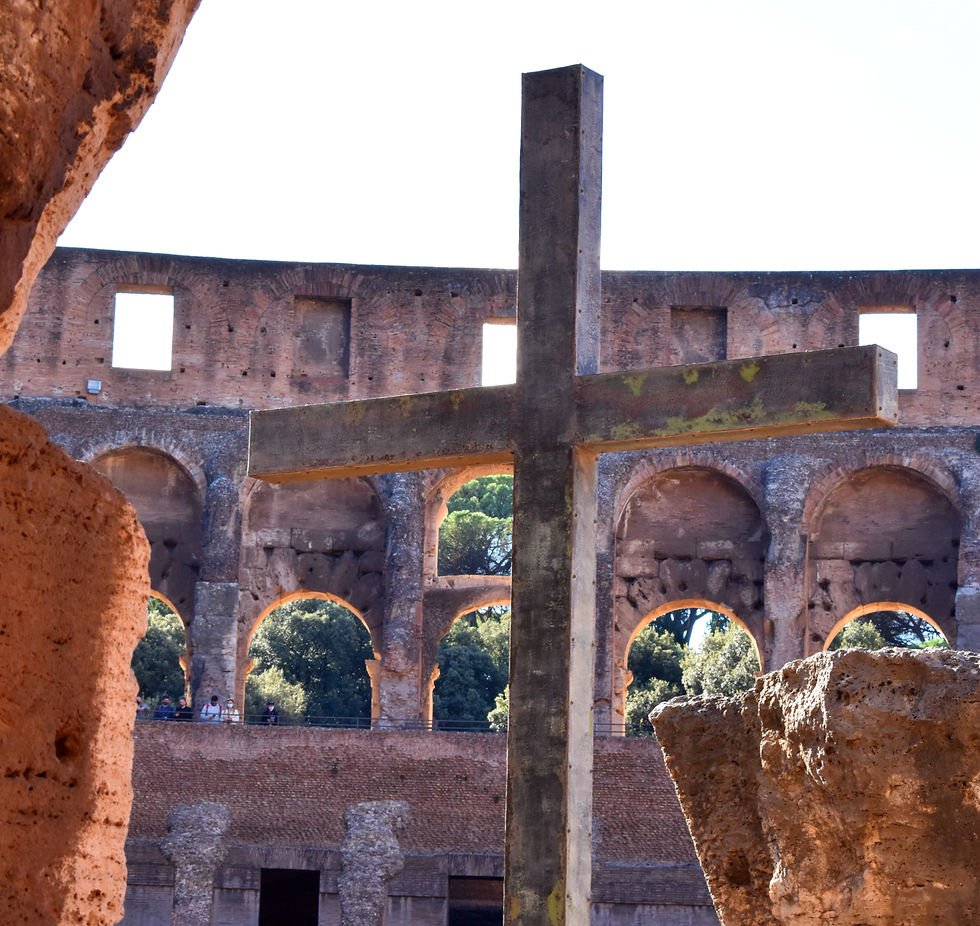
The earliest Christians staked their lives on the conviction that Jesus was right: that the way of the cross was a world-altering subversion of our concepts of power by which God was renewing the world. They trusted that what God resurrects will always exceed what we could ever accomplish through force of will. The kingdom in which they were citizens was not one seized through power, but received through faithfulness.
My point here is not finger-pointing. It is confession.
It is, to borrow Isaiah’s exclamation, that I and a man who has been tainted by these seductive tendencies and I live among a people who succumb to these very temptations. I’m tempted by visions of the will-to-power that are termed ‘leadership’ and heralded as virtuous among my people. I’m tempted to identify the way I want the world to be and look for those who can most effectively make it that way. I’m tempted to see myself as a theological culture warrior, amassing intellectual ammunition for the sake of overcoming those in the other camp. That is precisely why I need seasons like Lent and the opportunity to name and turn away from these temptations in favor of the cross. These 40 days are for being honest about whatever tempts me away from the pattern of the cross, especially when it looks like a virtue in my community: exerting our ‘values’ as powerfully as possible. For followers of Jesus, even the most powerfully exerted values are not good if they can’t stand before the foot of the cross.
“Lord, have mercy upon me, O Lord, according to your unfailing love.”
*An examination of the way the will to power has shaped evangelical engagement in American politics is available in my chapter, "Voting, Values, and Vocation: The Shape of Evangelical Politics" in Whatever Happened to Evangelicalism? Al Truesdale, ed. (The Foundry Publishing, 2017).



Comments